Simplified Mobile Web Experience

PLG Growth Experiment | Dec 2025 – Jan 2026

My Role

Product Design

UX Strategy

Interaction Design

Team

PLG growth

Experimentation

Tools

Figma

Notion

Statsig

Cursor

Snowflake MCP

Executive Summary

I led the design of a simplified mobile web experience focused on improving activation by streamlining email creation, sending, and required prerequisites. By reducing friction and accelerating the path to sending, the experiment delivered substantial gains in email sending participation at every depth level, including a +69.3% lift in first send, while also improving critical enablers like email verification (+11.7%) and physical address completion (+5.4%). The experiment reached strong statistical significance and was recommended for full rollout.

Context

Within our PLG growth initiative, the mobile web experience represented a critical activation surface. A significant portion of trial users first engage through mobile devices, yet the existing mWeb flow created unnecessary friction in core activation behaviors.


The team’s mandate was clear: identify and remove choke points that prevented users from creating and sending emails. The simplified mWeb experience focused specifically on accelerating users toward meaningful activation behaviors, particularly sending.


This work was reported directly to the Chief Growth Officer and influenced roadmap direction based on performance signal.

What We Changed and Why It Mattered

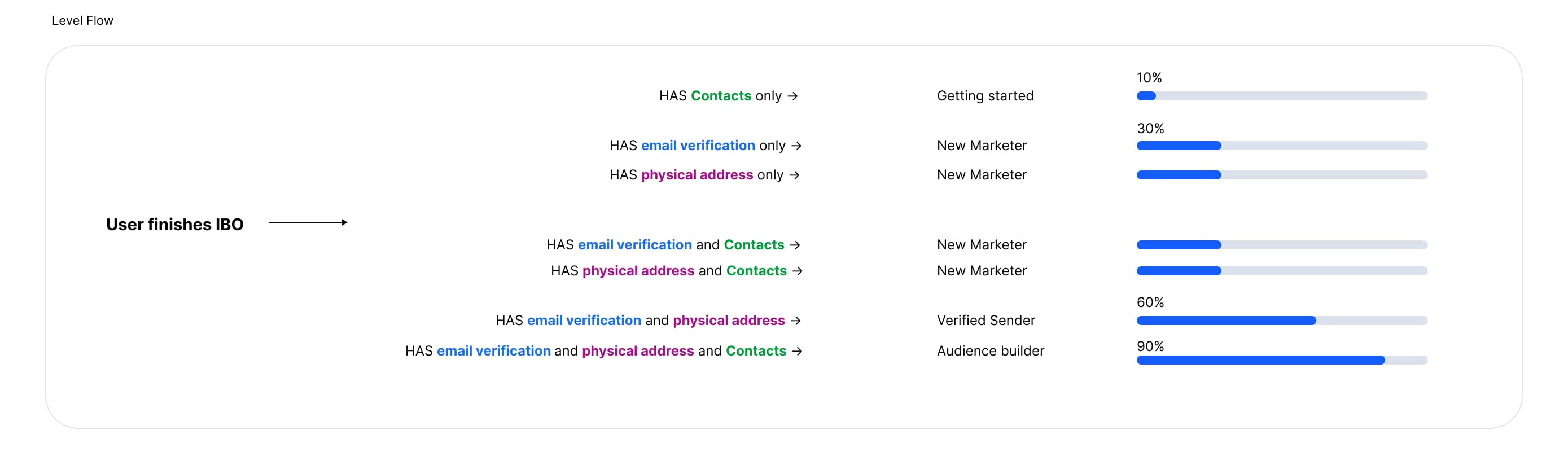
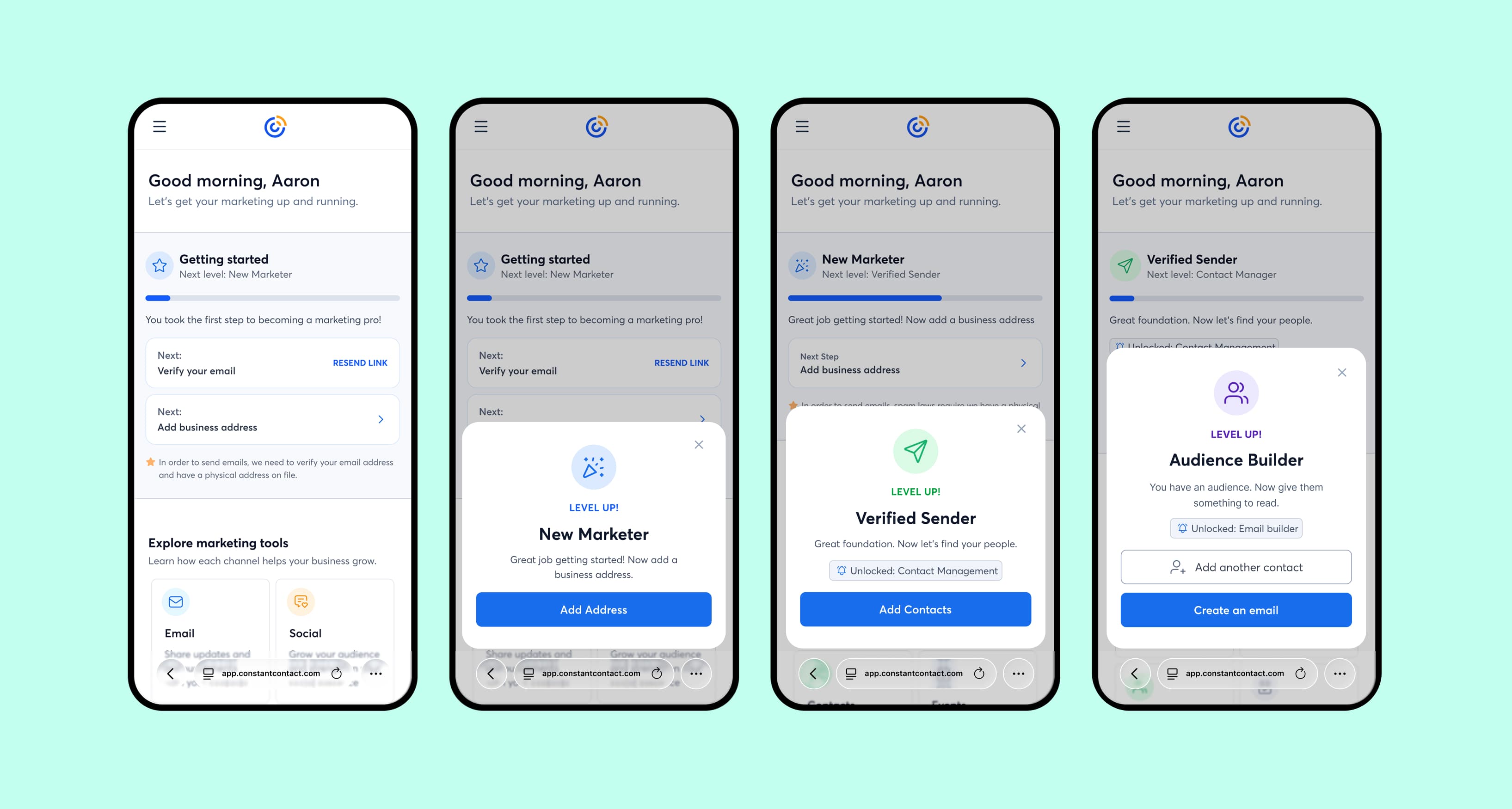
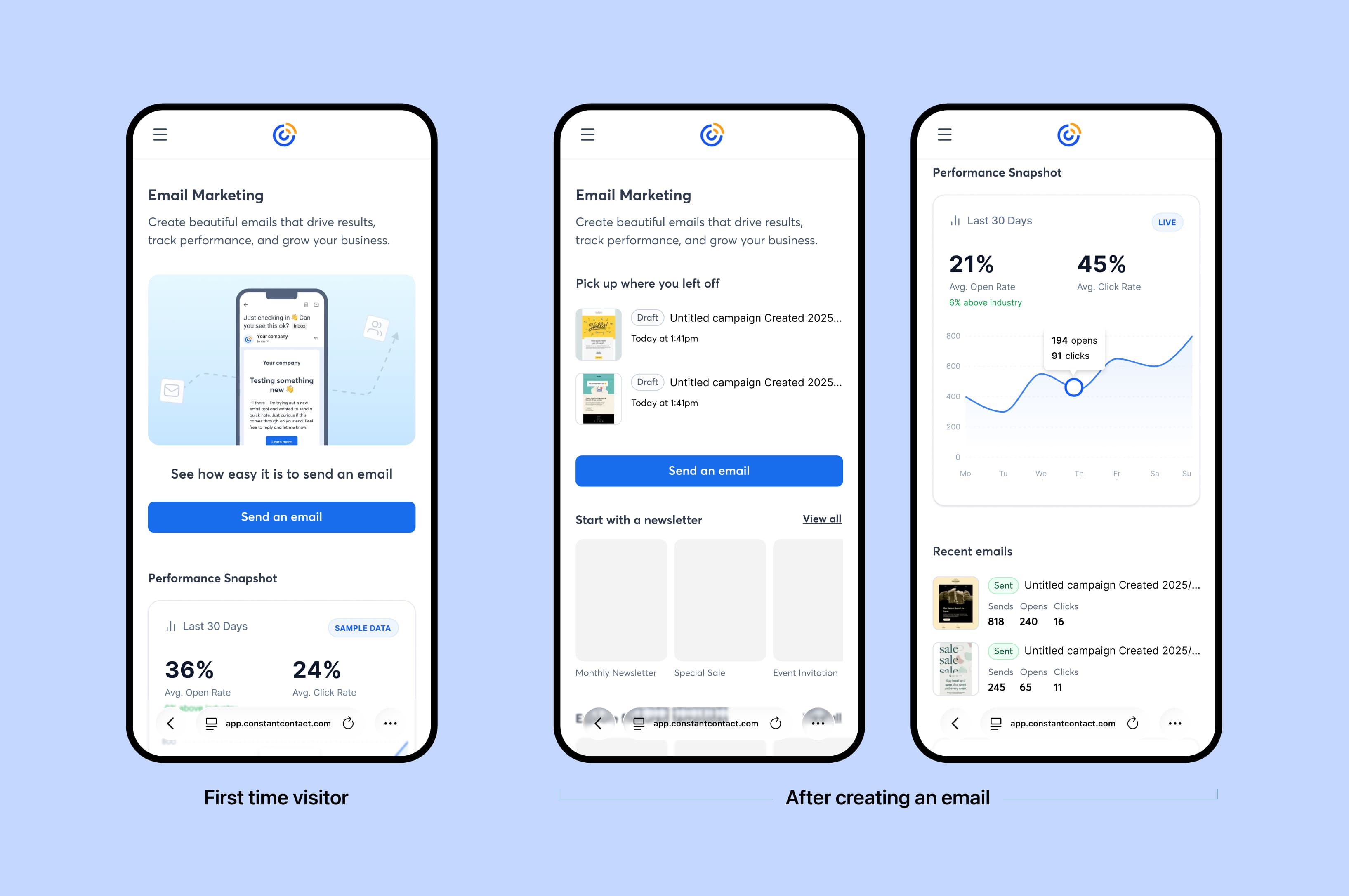
The redesign streamlined the mobile web interface to prioritize:

  • Email creation
  • Email sending
  • Required prerequisites (email verification and physical address)

Rather than expanding features, we simplified pathways and reduced cognitive overhead. The objective was clarity, momentum, and fast forward progress toward sending.

The results were decisive:

Email Sending Participation

  • +69.3% lift in accounts sending 1+ emails
  • +76.5% lift in accounts sending 2+ emails
  • +83.4% lift in accounts sending 3+ emails

Sending is the core activation behavior. Improvements were statistically significant across all depth levels.

Activation Prerequisites

  • +11.7% increase in email verification
  • +5.4% increase in physical address completion

Both are required before sending. Improvements here directly enabled the send lifts.

Email Creation Depth

  • +8.9% lift at 1+ created
  • +25.3% lift at 2+ created
  • +35.7% lift at 3+ created

Engagement deepened meaningfully beyond initial creation.

Trade-Offs and Guardrails

Trial-to-paid conversion (T:P) remained neutral, indicating no monetization risk.


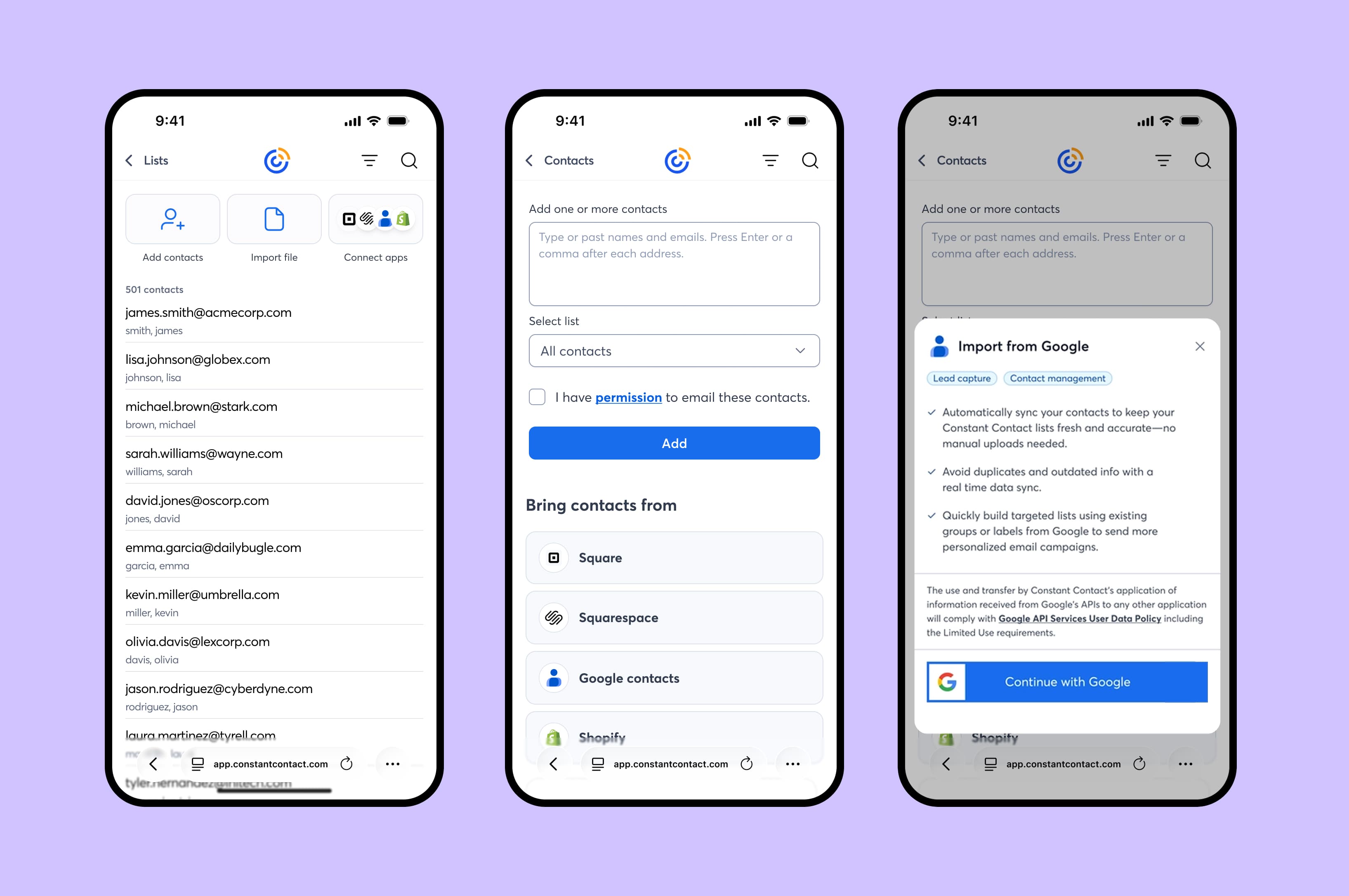
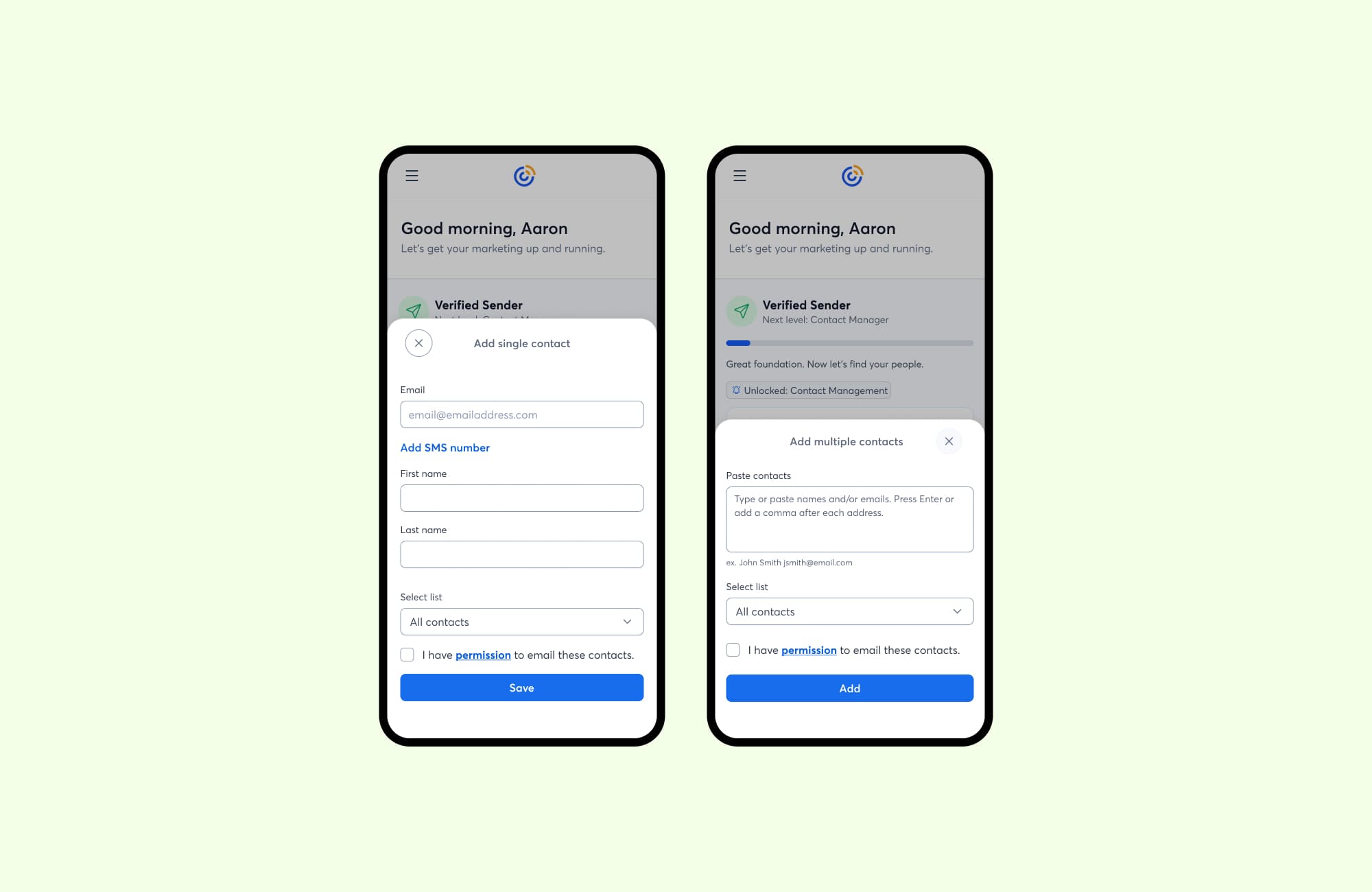
Contact addition depth declined at 3+ contacts due to a behavioral shift introduced by a simplified single-add flow. The previous bulk-add pattern made it easier to reach 3+ contacts in one action. This trade-off appears intentional and reversible through iteration.


Given the magnitude of activation gains, this was an acceptable exchange.

Experiment Design

  • 10,610 accounts analyzed
  • Mobile Web only
  • Direct traffic only
  • 14-day activity window
  • Holiday period excluded for data integrity


Statistical rigor included two-proportion z-tests, t-tests, and Bayesian analysis. The experiment ran approximately three weeks and achieved strong statistical confidence across primary metrics.

The initial iteration surfaced an “add single contact” sheet, this is a notable reason that metric dropped and was addressed in subsequent iterations

My Role

  • Design lead within a dedicated growth pod
  • Partnered with PMs and engineers on hypothesis refinement and execution
  • Focused on lowering cognitive overhead and clarifying progression
  • Ensured prerequisite flows aligned tightly with activation goals

Business Impact

This experiment materially improved the behaviors most correlated with activation and long-term retention: sending emails and completing required setup steps.

By simplifying the mobile web path to sending, we:

    • Increased meaningful product usage
    • Reduced friction in early lifecycle stages
    • Preserved monetization stability
    • Influenced broader product strategy toward lower cognitive overhead experiences

The experiment was recommended for full rollout.

What I’d Do Next

  1. Iterate on contact addition to recover depth without reintroducing friction.
  2. Measure long-term retention and send frequency of mobile-first users.
  3. Apply the simplified, activation-first framework to other constrained surfaces.

I design for teams that care about doing it right

Get in touch, or send me a cat video

Simplified Mobile Web Experience

PLG Growth Experiment | Dec 2025 – Jan 2026

My Role

Product Design

UX Strategy

Interaction Design

Team

PLG growth

Experimentation

Tools

Figma

Notion

Statsig

Cursor

Snowflake MCP

Executive Summary

I led the design of a simplified mobile web experience focused on improving activation by streamlining email creation, sending, and required prerequisites. By reducing friction and accelerating the path to sending, the experiment delivered substantial gains in email sending participation at every depth level, including a +69.3% lift in first send, while also improving critical enablers like email verification (+11.7%) and physical address completion (+5.4%). The experiment reached strong statistical significance and was recommended for full rollout.

Context

Within our PLG growth initiative, the mobile web experience represented a critical activation surface. A significant portion of trial users first engage through mobile devices, yet the existing mWeb flow created unnecessary friction in core activation behaviors.


The team’s mandate was clear: identify and remove choke points that prevented users from creating and sending emails. The simplified mWeb experience focused specifically on accelerating users toward meaningful activation behaviors, particularly sending.


This work was reported directly to the Chief Growth Officer and influenced roadmap direction based on performance signal.

What We Changed and Why It Mattered

The redesign streamlined the mobile web interface to prioritize:

  • Email creation
  • Email sending
  • Required prerequisites (email verification and physical address)

Rather than expanding features, we simplified pathways and reduced cognitive overhead. The objective was clarity, momentum, and fast forward progress toward sending.

The results were decisive:

Email Sending Participation

  • +69.3% lift in accounts sending 1+ emails
  • +76.5% lift in accounts sending 2+ emails
  • +83.4% lift in accounts sending 3+ emails

Sending is the core activation behavior. Improvements were statistically significant across all depth levels.

Activation Prerequisites

  • +11.7% increase in email verification
  • +5.4% increase in physical address completion

Both are required before sending. Improvements here directly enabled the send lifts.

Email Creation Depth

  • +8.9% lift at 1+ created
  • +25.3% lift at 2+ created
  • +35.7% lift at 3+ created

Engagement deepened meaningfully beyond initial creation.

Trade-Offs and Guardrails

Trial-to-paid conversion (T:P) remained neutral, indicating no monetization risk.


Contact addition depth declined at 3+ contacts due to a behavioral shift introduced by a simplified single-add flow. The previous bulk-add pattern made it easier to reach 3+ contacts in one action. This trade-off appears intentional and reversible through iteration.


Given the magnitude of activation gains, this was an acceptable exchange.

Experiment Design

  • 10,610 accounts analyzed
  • Mobile Web only
  • Direct traffic only
  • 14-day activity window
  • Holiday period excluded for data integrity


Statistical rigor included two-proportion z-tests, t-tests, and Bayesian analysis. The experiment ran approximately three weeks and achieved strong statistical confidence across primary metrics.

The initial iteration surfaced an “add single contact” sheet, this is a notable reason that metric dropped and was addressed in subsequent iterations

My Role

  • Design lead within a dedicated growth pod
  • Partnered with PMs and engineers on hypothesis refinement and execution
  • Focused on lowering cognitive overhead and clarifying progression
  • Ensured prerequisite flows aligned tightly with activation goals

Business Impact

This experiment materially improved the behaviors most correlated with activation and long-term retention: sending emails and completing required setup steps.

By simplifying the mobile web path to sending, we:

    • Increased meaningful product usage
    • Reduced friction in early lifecycle stages
    • Preserved monetization stability
    • Influenced broader product strategy toward lower cognitive overhead experiences

The experiment was recommended for full rollout.

What I’d Do Next

  1. Iterate on contact addition to recover depth without reintroducing friction.
  2. Measure long-term retention and send frequency of mobile-first users.
  3. Apply the simplified, activation-first framework to other constrained surfaces.

I design for teams that care about doing it right

Get in touch, or send me a cat video

Email

LinkedIn